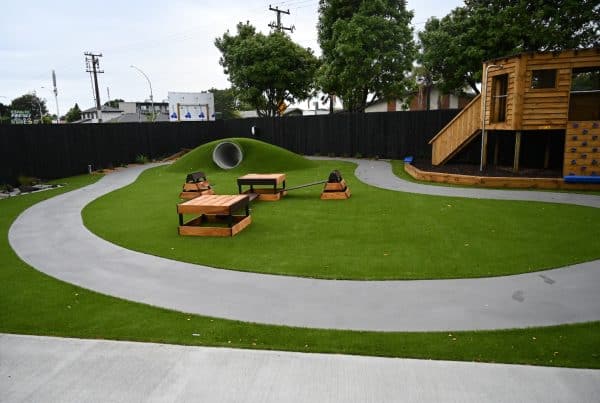

At Unreal Lawns & Courts, we understand the critical role of playground safety surfacing in creating secure play environments for children. This comprehensive guide explores the latest advancements in playground safety surfacing and safe playground surfaces for.
We’ll examine various options, from artificial grass to poured-in-place rubber and discuss key factors to consider when selecting the ideal surface for your playground. When discussing playground safety surfacing, it’s vital to consider its long-term benefits for child safety.
Why Safe Playground Surfaces Matter
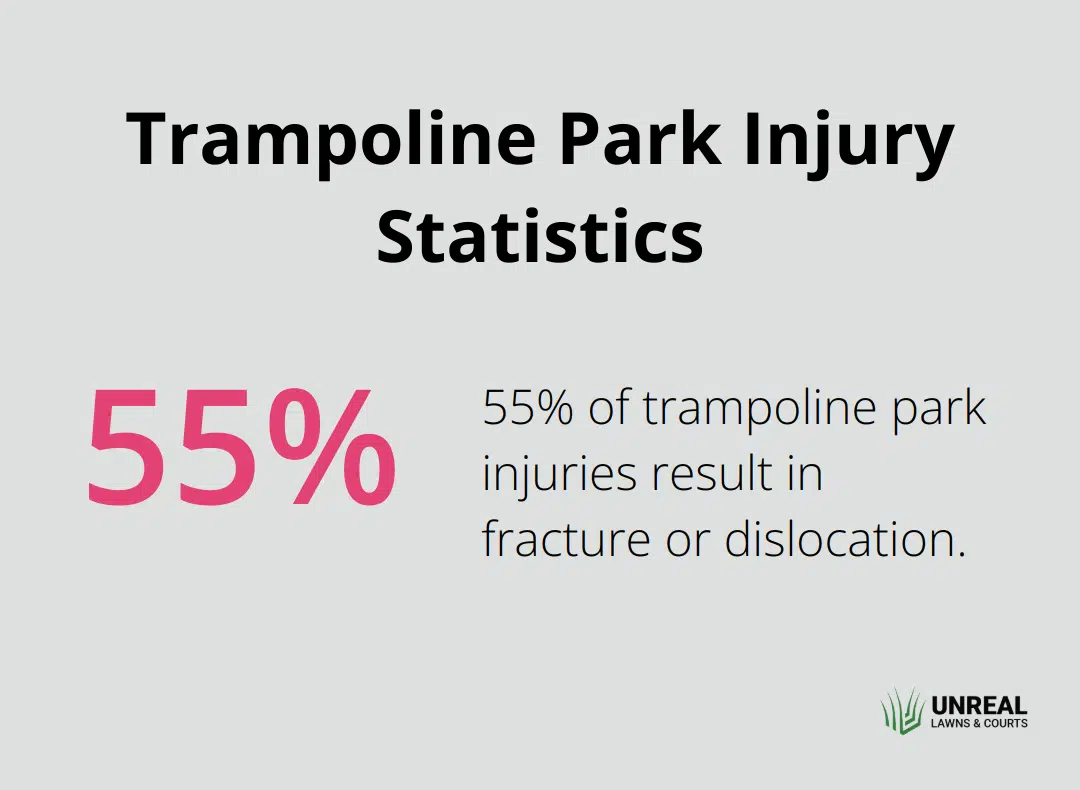
Safe playground safety surfacing plays a vital role in child safety. About 55% of trampoline park injuries result in fracture or dislocation, with an average of two trampoline deaths each year. This alarming statistic highlights the urgent need for proper playground safety surfacing measures in play areas.
Preventing Serious Injuries
Falls cause nearly 80% of all playground injuries, with 90% of the most severe injuries resulting from falls from significant heights. Shock-absorbing surfaces significantly reduce the risk of severe injuries. Artificial grass with proper shock pad cushions falls and minimises the impact on children’s bodies. Implementing quality playground safety surfacing can drastically improve safety outcomes.
Compliance with Safety Standards
Meeting safety standards protects children and provides legal compliance. The New Zealand standard NZS 5828:2015 offers essential guidelines for playground equipment and surfacing safety. Adherence to these standards reassures parents that their children play in a secure environment. Complying with safety standards ensures that playground safety surfacing meets necessary regulations.
Creating Inclusive Play Spaces
Safe surfaces extend beyond injury prevention; they create inclusive play environments for all children. Wheelchair-accessible surfaces (like poured-in-place rubber) allow children with mobility challenges to participate fully. This inclusivity promotes social interaction and ensures every child enjoys the playground experience. Inclusive playground safety surfacing ensures that all children have access to safe play areas.
Regular Inspections and Maintenance
Playground owners should conduct regular surface inspections to identify wear and tear. The Play Inspect app streamlines these checks efficiently. Prioritising safety and accessibility creates spaces where children explore, learn, and grow with minimal risks.
Regular checks of playground safety surfacing are essential for maintaining safety and compliance.
As we move forward, let’s examine the various types of safe playground surfaces available in 2025, each offering unique benefits for creating secure and enjoyable play areas.
Safe Playground Surface Options
Selecting the right playground surface stands as a cornerstone of child safety and enjoyment. The top options available offer a range of benefits for creating secure and engaging play areas. Choosing the right playground safety surfacing is crucial for effective injury prevention.
Artificial Grass and Synthetic Turf
Synthetic turf can have detrimental impacts with regard to maintenance, access to utilities, natural drainage and offers no ecological or long-term amenity. While it has been considered a popular choice for playgrounds, it’s important to weigh these potential drawbacks against its benefits.
It’s important to evaluate the implications of synthetic options for playground safety surfacing.
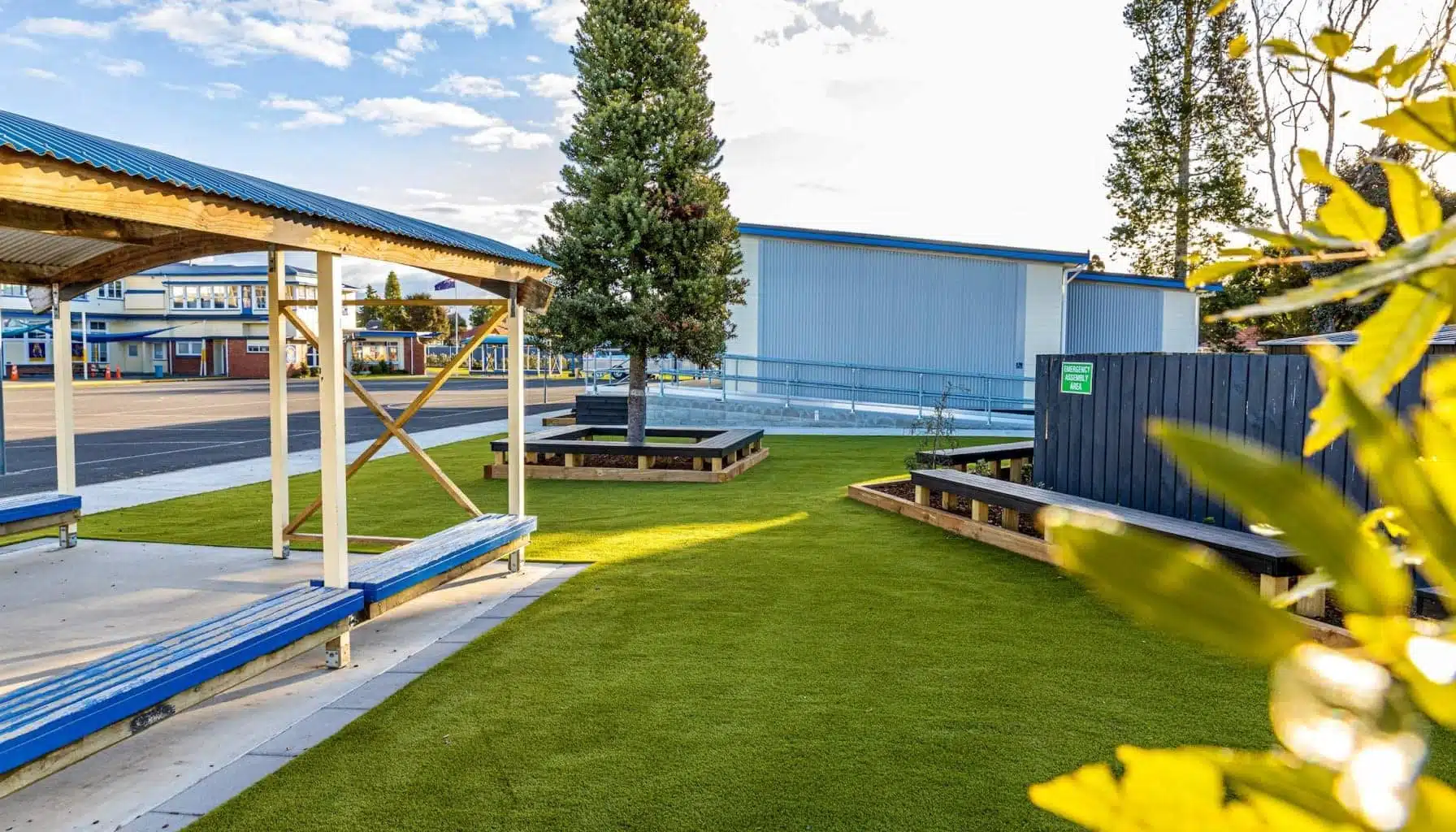
The versatility of artificial grass sets it apart. Installers can customise it with varying pile heights and densities to suit different play activities. For example, a shorter pile might suit areas with play equipment, while a longer pile could offer softer landings in open spaces. Use different colours and patten’s to create interesting play areas.
Rubber Surfaces for Enhanced Safety
Rubber-based surfaces like poured-in-place rubber, are often chosen for their shock absorption properties. However, it’s important to consider all aspects of these materials when making a decision for playground surfaces.
Poured-in-place rubber surfacing presents another choice. This seamless surface allows for customisation in colours and pattens, enabling creative playground designs. It proves particularly beneficial for inclusive playgrounds by providing a smooth, wheelchair-accessible surface. Poured-in-place playground safety surfacing offers a unique combination of safety and creativity.
Wood Mulich
Wood mulich offers a natural-looking option with good impact absorption. Manufactured from virgin wood fibres, it contains no harmful chemicals or splinters. This surface requires regular maintenance to ensure proper depth and distribution, especially in high-traffic areas. Choosing wood mulich as playground safety surfacing can provide a natural feel while ensuring safety.
The cost-effectiveness of engineered wood fibre makes it a popular choice for budget-conscious projects. However, it may not match the durability of synthetic options and might require more frequent replenishment.
Factors to Consider in Playground Safety Surface Selection
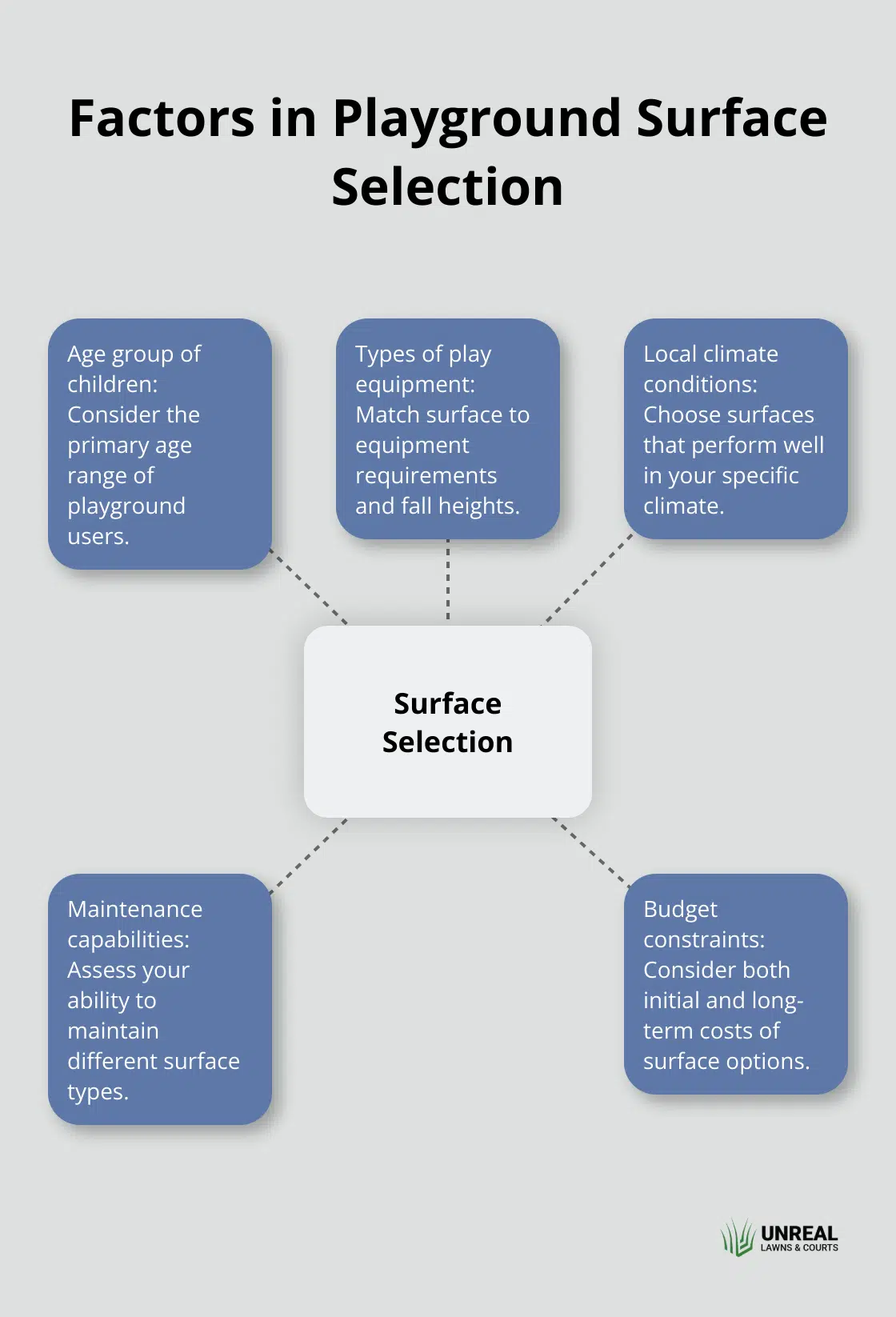
When choosing a playground surface, several factors come into play:
- Age group of the children
- Types of play equipment
- Local climate conditions
- Maintenance capabilities
- Budget constraints
Regular inspections and maintenance prove essential for all playground safety surface types to ensure ongoing safety and compliance with standards like NZS 5828:2015.
Regular maintenance of playground safety surfacing is critical to its longevity.
As we move forward, let’s explore the critical factors that influence the selection of the ideal playground surface, considering aspects such as durability, maintenance, cost-effectiveness, and environmental impact.
Choosing the Right Playground Safety Surface
Selecting an appropriate playground surface requires careful consideration of several key factors. The right choice can significantly impact safety, usability, and long-term satisfaction. This chapter explores the critical aspects to consider when making this important decision.
Durability and Longevity
The longevity of a playground safety surface is a paramount consideration. High-quality artificial grass can last up to 15 to 20 years with proper care. This extended lifespan results in lower replacement costs and consistent safety performance over time. When evaluating options, it’s advisable to request wear test results and warranty information from suppliers to gauge the expected lifespan of different surfaces.
Maintenance Requirements
Different surfaces demand varying levels of upkeep. Natural grass requires frequent mowing, watering, and fertilising, while synthetic options need minimal maintenance. However, even low-maintenance surfaces require some care. For example, rubber mulch may need occasional raking and replenishment. It’s important to factor in your maintenance capabilities and budget when making your choice.
Cost-Effectiveness
Initial installation costs can vary widely between surface types. Engineered wood mulich might have a lower upfront cost but may require more frequent replenishment. Synthetic turf or poured-in-place rubber surfaces have higher initial costs but often prove more cost-effective over time due to their durability and low maintenance needs. It’s essential to consider both short-term and long-term expenses in your decision-making process.
Environmental Impact
The environmental impact of playground safety surfaces is an increasingly important factor. Natural materials like wood chips are biodegradable but may require frequent replacement. Synthetic options, while not biodegradable, can be more water-efficient and reduce the need for potentially harmful pesticides or fertilisers. Some manufacturers now offer recycled or recyclable synthetic turf options (addressing environmental concerns). Understanding the environmental impact of playground safety surfacing is increasingly important.
Safety Standards Compliance
Compliance with safety standards is non-negotiable when selecting a playground surface. The chosen surface must meet or exceed local and national safety regulations (such as NZS 5828:2015 in New Zealand). This compliance ensures that the surface provides adequate fall protection and minimises the risk of injuries.
The best choice often depends on specific circumstances, including climate, usage patterns, and available resources. A thorough evaluation of these factors will equip decision-makers to select a playground surface that offers the perfect balance of safety, durability, and enjoyment for years to come.
Final Thoughts
Playground safety surfacing plays a vital role in creating secure environments for children to explore, learn, and grow. The choice of playground safety surfacing material impacts injury prevention, accessibility, and overall playground enjoyment. Regular maintenance and inspections ensure that the chosen playground safety surfacing continues to meet safety standards and provides optimal protection against falls and injuries.
Community involvement enhances playground safety. Engaging local residents, parents, and children in the planning and maintenance of play areas creates spaces that meet community needs while fostering ownership and responsibility. This collaborative approach leads to more innovative, inclusive, and safe playground designs.
Unreal Lawns & Courts offers premium artificial grass solutions that combine safety with aesthetics. Their synthetic turf products provide a low-maintenance, durable option for playgrounds (ensuring a safe and attractive play surface year-round). The investment in high-quality playground safety surfacing supports the health and safety of children.