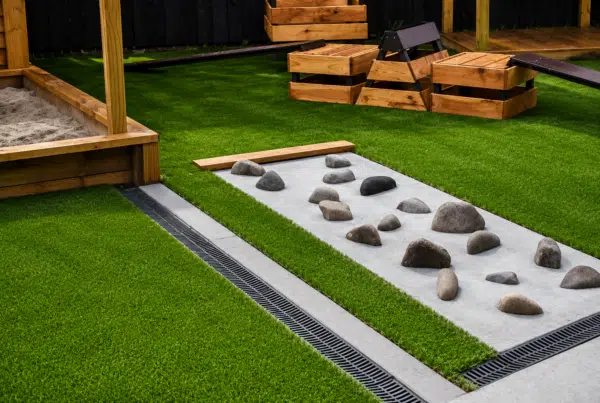
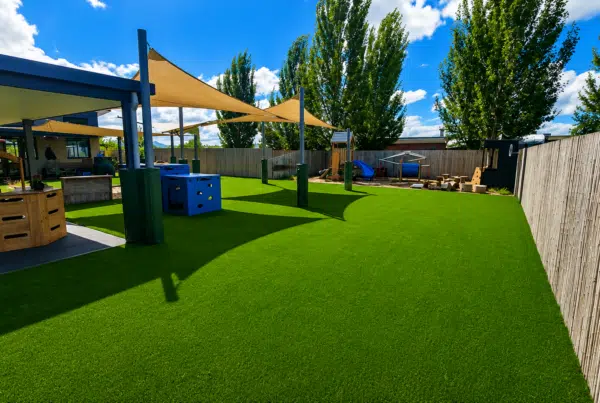
Outdoor play is one of the most important parts of early childhood education. It supports children’s physical development, encourages creativity, builds confidence and provides valuable opportunities for learning through play. Creating a safe, clean and engaging outdoor environment starts with selecting the right playground surfacing.
Childcare centres have a range of playground surfacing options available, including natural grass, bark, wet pour rubber and artificial grass. Each offers different advantages depending on your budget, maintenance requirements, safety needs and how the outdoor space is used every day.
Choosing the right playground surface isn’t simply about appearance. It affects playground safety, drainage, maintenance costs, hygiene and how often children can enjoy outdoor play throughout the year.
This guide explains the most common childcare playground surfacing options, compares their advantages and disadvantages, and outlines the key factors to consider when planning a safer, more practical outdoor learning environment.
Why Playground Surfacing Matters
A well-designed playground is much more than an outdoor play area. It’s an extension of the learning environment where children develop balance, coordination, social skills and confidence through exploration and active play.
The playground surface plays a significant role in how safe, clean and functional that environment remains throughout the year.
For many childcare centres, maintaining natural outdoor areas can become increasingly difficult as hundreds of little feet use the playground every day. During winter, natural grass often turns into muddy areas that children carry back into classrooms, while dry summer conditions can create dusty, worn patches that require ongoing maintenance.
The right playground surfacing helps childcare providers:
- Improve playground safety
- Reduce mud and dirt tracked indoors
- Improve drainage after heavy rain
- Keep outdoor areas usable throughout the year
- Reduce ongoing maintenance costs
- Create a cleaner environment for children and staff
- Improve the appearance of the centre
- Support active outdoor learning every day
Rather than continually repairing worn surfaces, many childcare centres are now investing in playground surfacing solutions designed to withstand heavy daily use while reducing maintenance over the long term.
Common Childcare Playground Surfacing Options
There is no single playground surface that suits every childcare centre. The best solution depends on the type of play equipment, the amount of daily use, maintenance expectations and the overall design of the outdoor learning environment.
Understanding the advantages and limitations of each option makes it easier to choose the right solution for your centre.

| Surface | Safety | Maintenance | Drainage | Best For |
|---|---|---|---|---|
| Natural Grass | Good | High | Fair | General play |
| Bark | Good | High | Good | Play equipment |
| Wet Pour Rubber | Excellent | Low | Excellent | High-impact areas |
| Artificial Grass + SafeBase Shockpad | Excellent | Low | Excellent | Whole childcare centres |
Natural Grass
Natural grass has traditionally been the most common playground surface for childcare centres. It provides a soft, natural appearance and creates an attractive outdoor environment when conditions are ideal.
However, natural grass can struggle under constant foot traffic. Areas around playground equipment, entrances and popular play zones often become compacted, muddy and worn, requiring continual maintenance to keep them safe and attractive.
Advantages
- Natural appearance
- Soft underfoot
- Relatively low installation cost
- Suitable for general open play areas
- Environmentally familiar for children
Disadvantages
- Becomes muddy during wet weather
- Develops bare patches from heavy use
- Requires regular mowing, watering and fertilising
- Can become dusty during dry periods
- Often requires temporary closure while recovering from wear
For busy childcare centres, the ongoing maintenance required to keep natural grass in good condition can become both time-consuming and expensive.
Bark
Bark remains a common playground surfacing option, particularly beneath playground equipment where impact attenuation is required. It offers a natural appearance and has been widely used in childcare playgrounds for many years.
While bark can provide effective cushioning, it requires regular maintenance to remain safe and compliant. Daily use gradually moves the bark away from high-impact areas, making ongoing topping up and raking essential.
Advantages
- Suitable beneath playground equipment
- Natural appearance
- Lower initial installation cost
- Provides impact absorption when correctly maintained
Disadvantages
- Requires regular topping up
- Can be displaced during play
- Tracks into classrooms and indoor spaces
- Requires continual maintenance
- Breaks down over time and needs replacing
- Can create uneven surfaces if not maintained
Many childcare providers are now looking for lower-maintenance alternatives that offer similar safety benefits while creating cleaner outdoor environments.
Wet Pour Rubber
Wet pour rubber is a synthetic playground surfacing system commonly used beneath playground equipment and in public playgrounds. It creates a continuous impact-absorbing surface that can be installed in a wide range of colours and designs.
It performs well where accessibility and impact protection are priorities, although it is generally one of the more expensive playground surfacing options.
Advantages
- Excellent impact protection
- Suitable for accessible playgrounds
- Available in a wide range of colours
- Durable and long-lasting
- Low routine maintenance
Disadvantages
- Higher installation cost
- Can become hot in direct sunlight
- Difficult to repair without visible joins
- Limited natural appearance
- Less flexible to modify after installation
For some childcare centres, wet pour rubber is best suited beneath specific play equipment rather than throughout the entire playground.

Artificial Grass with SafeBase Certified Shockpad
Artificial grass has become one of the fastest-growing playground surfacing choices for childcare centres throughout New Zealand. When installed over a certified shockpad system, it combines a natural appearance with independently tested playground safety, excellent drainage and significantly lower maintenance than traditional playground surfaces.
Unlike natural grass, artificial grass remains green throughout the year without mowing, watering or fertilising. It also creates a cleaner outdoor environment by reducing mud and helping keep classrooms cleaner after wet weather.
Modern artificial grass systems are designed specifically for high-use environments and can incorporate independently certified playground safety systems suitable for playground equipment requiring Critical Fall Height protection.
Many childcare centres choose Unreal Lawns’ exclusive Cool Turf 5-in-1 Technology because it delivers more than just a realistic-looking lawn. Combined with the SafeBase Certified Shockpad System, it provides excellent drainage, a surface designed to stay more comfortable during New Zealand’s warmer months, and a durable solution built for busy childcare environments. With different SafeBase configurations available to suit specific Critical Fall Height requirements, childcare providers can create safer outdoor play areas without compromising appearance or performance.
Advantages
- Cleaner outdoor play areas
- Excellent drainage
- Low ongoing maintenance
- Green all year round
- Suitable for heavy daily use
- Can incorporate certified playground safety systems
- Comfortable underfoot
- Creates a natural appearance
- Reduces mud carried into classrooms
Disadvantages
- Higher upfront investment than natural grass
- Professional installation is recommended
- Certified systems are required beneath qualifying playground equipment

For many childcare centres, artificial grass provides an excellent balance between safety, appearance, durability and long-term maintenance savings, making it an increasingly popular choice for modern outdoor learning environments.
Choosing the Right Playground Surface for Different Areas
Not every area within a childcare centre has the same requirements. A surface that performs well beneath playground equipment may not be the best choice for bike tracks, open play spaces or outdoor learning areas.
Planning each area individually helps create a safer, more practical and enjoyable environment for children while reducing maintenance over the long term.
Under Playground Equipment
Areas beneath climbing frames, forts and play structures require the highest level of consideration because they are designed to help protect children in the event of a fall.
Depending on the height of the equipment, the playground surface may need to meet specific Critical Fall Height (CFH) requirements using independently tested and certified systems.
Artificial grass installed over the SafeBase Certified Shockpad System provides an attractive alternative to traditional bark while delivering certified impact attenuation for qualifying playground equipment.
Bike Tracks
Bike tracks experience constant daily use and require a surface that is durable, stable and easy to maintain.
Whether children are riding balance bikes, scooters or trikes, smooth transitions between different activity zones help improve both safety and usability.
Artificial grass is commonly combined with concrete or asphalt pathways to create clearly defined riding areas while maintaining a natural appearance throughout the playground.
Open Play Areas
Open grassed spaces are often the busiest areas within a childcare centre.
Children use these areas for running games, group activities, imaginative play and everyday learning experiences.
The ideal surface should:
- Drain well after rain
- Remain usable throughout the year
- Be comfortable underfoot
- Require minimal maintenance
- Maintain a clean, attractive appearance
Artificial grass has become increasingly popular in these areas because it remains green throughout every season while eliminating muddy patches and worn grass.
Quiet Learning Areas
Outdoor learning isn’t always active.
Many childcare centres now include quiet spaces where children can read, participate in group discussions or simply relax outdoors.
These areas benefit from soft, comfortable playground surfacing that encourages children to sit, play and learn without becoming muddy after rain.
Creating inviting outdoor classrooms helps extend learning beyond the traditional indoor environment.
Entranceways and High Traffic Areas
Entranceways experience some of the highest foot traffic within a childcare centre.
Natural grass often struggles in these locations, becoming worn, muddy and difficult to maintain.
Installing durable playground surfacing in these high-use areas helps improve the overall presentation of the centre while reducing the amount of dirt carried into classrooms.

How Playground Surfacing Improves Childcare Operations
Choosing the right playground surface benefits far more than the children using it every day.
It can also improve the daily operation of the entire childcare centre.
Cleaner Classrooms
One of the biggest challenges childcare centres face is mud.
During winter, children frequently carry mud and dirt indoors after outdoor play, creating additional cleaning for educators while increasing wear on carpets and flooring.
Cleaner playground surfaces help reduce the amount of dirt entering classrooms, creating a tidier learning environment for both children and staff.
Lower Maintenance
Maintaining natural grass requires ongoing mowing, watering, fertilising and repairs to worn areas.
Bark requires regular raking and topping up to maintain adequate depth beneath playground equipment.
Lower-maintenance playground surfacing allows staff to spend less time managing outdoor areas and more time supporting children’s learning and development.
More Usable Play Time
Children benefit most when outdoor play is available every day.
Poor drainage and muddy conditions can make playgrounds unusable for extended periods following heavy rain.
Free-draining playground surfaces help outdoor areas recover quickly, allowing children to return to play sooner.
Better First Impressions
Parents often form their first impression of a childcare centre before they even walk through the front door.
A clean, well-maintained playground demonstrates that the centre takes pride in providing a safe and welcoming environment.
An attractive outdoor space also creates a positive experience for prospective families during centre visits.
Questions to Ask Before Choosing Playground Surfacing
Every childcare centre has different priorities.
Before selecting a playground surface, consider the following questions.
How many children use the playground each day?
High-use centres require durable surfaces designed to withstand constant activity without becoming worn or unsafe.
Do we need certified playground safety?
If playground equipment has a Critical Fall Height requirement, the surfacing system should be designed to provide the appropriate level of impact attenuation.
How much maintenance can we realistically manage?
While some surfaces have lower installation costs, they may require significantly more maintenance over their lifetime.
Considering ongoing maintenance often provides a better indication of long-term value than installation cost alone.
Does our playground suffer from poor drainage?
If outdoor areas regularly become muddy after rain, improving drainage should be a key consideration when selecting new playground surfacing.
Are we planning future upgrades?
Choosing a flexible playground surfacing system makes it easier to add new equipment, activity zones or learning spaces as the childcare centre grows.
Childcare Playground Transformation
A local childcare centre approached Unreal Lawns after years of struggling with a muddy natural grass playground that became unusable after heavy rain. Staff spent valuable time cleaning muddy footprints from classrooms, while sections of the playground regularly had to be closed to allow the grass to recover. We installed a premium artificial grass system with excellent drainage, creating a cleaner, safer and more practical outdoor play environment. Today, children enjoy year-round access to the playground, classrooms stay cleaner, and the centre has significantly reduced ongoing maintenance while improving its presentation for visiting families.

Playground Safety Standards
Safety should always be the first consideration when planning a childcare playground.
For playground equipment where impact protection is required, surfacing systems should be independently tested and certified to recognised standards.
In New Zealand, playground safety commonly references:
- NZS 5828:2015 – Playground equipment and surfacing.
- EN 1177:2018 – Impact-attenuating playground surfacing.
These standards help determine the level of impact protection required beneath playground equipment based on its Critical Fall Height (CFH).
Unreal Lawns’ SafeBase Certified Shockpad System is available in different configurations to provide certified Critical Fall Height protection for qualifying playground applications.
It’s important to remember that not every playground area requires certified impact attenuation. Open play areas, pathways and outdoor learning spaces often have different requirements than climbing structures or elevated play equipment.
Working with experienced playground surfacing specialists helps ensure each area is designed appropriately for its intended use.
Why Professional Installation Matters
Even the highest-quality playground surfacing will only perform as well as the installation beneath it.
Proper site preparation forms the foundation of a long-lasting playground. Ground levels, drainage, edging and base construction all influence how well the finished surface performs over time.
Professional installation also helps ensure:
- Smooth, even surfaces
- Effective drainage
- Secure joins
- Long-term durability
- Compliance with certified playground systems where required
Investing in quality installation helps maximise the lifespan of the playground while reducing future maintenance requirements.


Which Playground Surface Is Right for Your Childcare Centre?
There is no single playground surface that is perfect for every childcare centre.
Natural grass may suit lightly used recreational areas.
Bark remains a suitable option beneath some playground equipment when maintained correctly.
Wet pour rubber provides excellent impact protection in specific applications.
Artificial grass installed over certified playground systems offers an excellent combination of safety, drainage, durability, cleanliness and low maintenance, making it an increasingly popular choice for modern childcare centres. When combined with Unreal Lawns’ exclusive Cool Turf 5-in-1 Technology, the SafeBase Certified Shockpad System and professional installation, it provides a premium solution designed specifically for busy New Zealand childcare environments. The result is a cleaner, safer and more practical outdoor play space that children can enjoy throughout the year while reducing ongoing maintenance for staff.
The best solution depends on your playground design, equipment, maintenance expectations, budget and long-term goals.
Planning a Childcare Playground Upgrade
Every childcare playground is unique.
Whether you’re upgrading a worn outdoor area, replacing natural grass or designing a brand-new learning environment, taking the time to plan the project properly will deliver better long-term results.
Consider how children move throughout the space, where the highest traffic occurs, how outdoor learning can be encouraged and which surfacing materials best support each activity zone.
A well-designed playground should create a safe, engaging and practical outdoor environment that supports children’s development while remaining attractive and easy to maintain for many years.
About the Author: Paul Gardner
Founder & Global Turf Specialist at Unreal Lawns
Paul Gardner has spent years developing his knowledge of synthetic turf technology, including travelling internationally to study manufacturing, yarn engineering and playground safety systems. His experience helps shape the artificial grass and playground surfacing systems Unreal Lawns provides for New Zealand conditions.
Learn More About Artificial Grass for Childcare Centres
Childcare Guides
- Playground Safety Standards for Childcare Centres – Learn about Critical Fall Height (CFH), recognised playground safety standards, certified surfacing systems and how to create safer outdoor play environments.
- Artificial Grass vs Bark for Childcare Centres – Compare two of the most popular playground surfacing options, including safety, maintenance, drainage and long-term value.
- Artificial Grass Cost for Childcare Centres – Understand the factors that influence artificial grass installation costs and how to compare quotations with confidence.
- Artificial Grass Maintenance for Childcare Centres – Discover simple maintenance practices that keep artificial grass playgrounds clean, safe and performing at their best throughout the year.
Playground Safety & Technology
- SafeBase Certified Shockpad System – Discover our independently tested playground impact protection system, certified to NZS 5828:2015 and EN 1177:2018 and designed for use beneath premium artificial grass where Critical Fall Height protection is required.
- Cool Turf 5-in-1 Technology – Discover how our exclusive artificial grass technology enhances comfort, durability and long-term playground performance.
- Professional Artificial Grass Installation – Find out why expert site preparation, drainage and installation are essential for long-lasting playground performance.
Childcare Solutions
- Artificial Grass for Childcare Centres – Explore our complete range of artificial grass solutions designed for childcare centres, outdoor learning spaces and playgrounds throughout New Zealand.
Whether you’re upgrading a playground, outdoor learning space or entranceway, these guides will help you choose the right artificial grass solution for your childcare centre.
Frequently Asked Questions
What is the best playground surfacing for childcare centres?
The best playground surfacing depends on how the outdoor space is used, the type of playground equipment, maintenance expectations and your budget. Many childcare centres choose artificial grass with certified playground systems because it provides a clean, durable and low-maintenance surface while supporting playground safety requirements.
Does childcare playground surfacing need to meet New Zealand Standards?
Yes, where playground equipment requires impact protection, the playground surfacing should be independently tested and certified to the appropriate standards. Certified systems can help meet recognised standards such as NZS 5828:2015 and EN 1177:2018 for Critical Fall Height (CFH) performance.
What is Critical Fall Height (CFH)?
Critical Fall Height (CFH) is the maximum height from which a child can fall while the playground surfacing is designed to reduce the risk of serious head injury. Different playground equipment requires different levels of certified impact attenuation depending on its height.
Is artificial grass safer than bark?
Both materials can provide suitable playground surfacing when correctly installed. Bark requires ongoing raking and topping up to maintain its depth, while artificial grass installed over a certified shockpad provides a cleaner, lower-maintenance surface with consistent impact protection.
Will playground surfacing reduce muddy classrooms?
Yes. Free-draining playground surfacing helps reduce mud after rain, meaning children are less likely to carry dirt into classrooms. Many childcare centres choose artificial grass to create cleaner outdoor spaces that remain usable throughout the year.
How long does childcare playground surfacing last?
The lifespan depends on the type of surfacing, the amount of daily use and how well it is maintained. Premium artificial grass systems installed professionally are designed to provide many years of reliable performance in busy childcare environments.
Can artificial grass be installed under playground equipment?
Yes. Artificial grass can be installed over independently certified shockpad systems designed to provide the required Critical Fall Height protection beneath qualifying playground equipment.
How long does playground surfacing installation take?
Every project is different. Installation time depends on the size of the playground, site preparation, drainage requirements and the type of playground surfacing selected. Smaller projects may be completed within a few days, while larger playground upgrades generally take longer.
Can playground surfacing include educational play features?
Absolutely. Modern playground surfacing can incorporate activity zones, colours, bike tracks, hopscotch, number games, alphabet trails and custom graphics that encourage imaginative play and outdoor learning while creating an engaging environment for children.
How do I choose the right playground surfacing for my childcare centre?
Start by considering your playground equipment, maintenance requirements, drainage, safety requirements and budget. Speaking with an experienced playground surfacing specialist can help you compare the available options and choose a solution that suits your childcare centre’s long-term needs.
Need Help Choosing the Right Childcare Playground Surfacing?
Every childcare centre is different, which means the best playground surfacing solution depends on your playground equipment, outdoor learning goals, maintenance expectations and budget.
Whether you’re replacing natural grass, upgrading a bark playground or designing a brand-new outdoor learning environment, the experienced team at Unreal Lawns can help you create a safer, cleaner and more enjoyable space for children.
Our premium artificial grass systems can be installed with the SafeBase Certified Shockpad System and exclusive Cool Turf 5-in-1 Technology to create outdoor play areas designed for New Zealand conditions.