
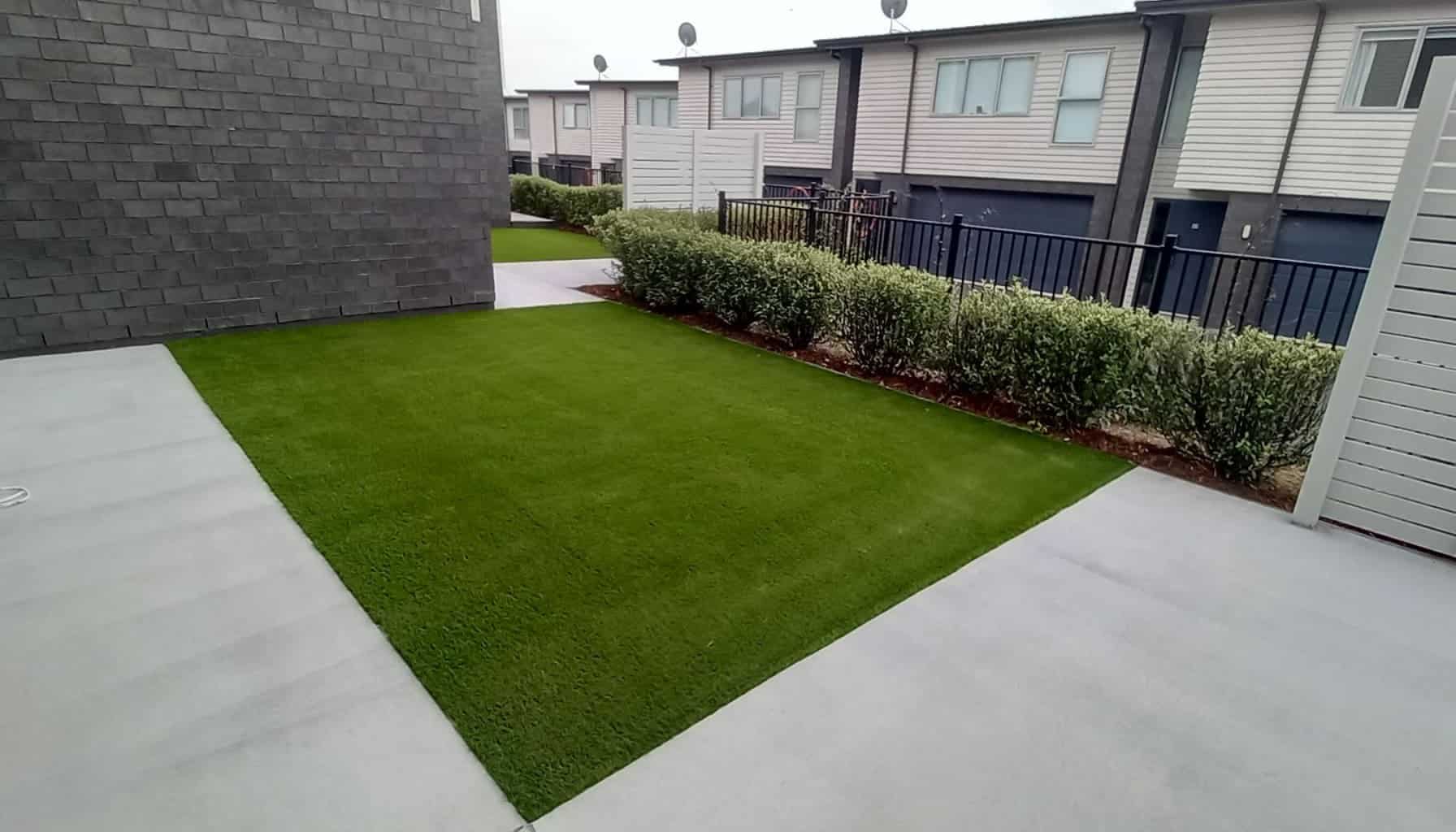

New Zealand’s dry summers pose a significant challenge for maintaining drought resistant grass. Water restrictions and drought conditions often leave natural grass parched and brown, leading to costly maintenance efforts.
At Unreal Lawns & Courts, we’ve seen a growing interest in drought-resistant grass alternatives that can withstand harsh weather conditions. Artificial turf offers a practical solution for homeowners and businesses looking to maintain an attractive outdoor space year-round.
This blog post explores the benefits of weather-resistant artificial grass and how it can transform your lawn care routine in New Zealand.
Why Natural Lawns Struggle in New Zealand’s Dry Summers
The Harsh Reality of Drought Conditions
New Zealand’s dry summers create significant challenges for natural lawn maintenance. As temperatures rise and rainfall decreases, homeowners and businesses face a difficult task to maintain green and healthy grass.
During extended dry periods, natural grass experiences stress. The lack of moisture causes grass blades to wilt and turn brown, resulting in a patchy and unattractive appearance. Recent examples of drought in New Zealand include the worst drought in Northland in 60 years, which occurred in 2010 when record low rainfall levels were recorded.
Water Restrictions Compound the Problem
Many local councils implement water restrictions during dry spells to conserve this precious resource. These restrictions often limit or prohibit lawn watering, making it nearly impossible to maintain a lush, green lawn naturally. Such measures, while necessary for water conservation, can prove devastating for natural grass.
The Hidden Costs of Green Grass Maintenance
Maintaining a green natural lawn during dry periods incurs financial costs. Increased water usage, when permitted, results in higher water bills.
Furthermore, stressed lawns become more susceptible to weed invasion and pest infestations. This often necessitates the use of herbicides and pesticides, adding to the overall maintenance costs.
Long-Term Effects on Lawn Health
Repeated exposure to drought conditions can have lasting effects on natural grass. The root systems may become shallow and weak, making the lawn less resilient to future stress. This cycle of damage and partial recovery can lead to a gradual degradation of lawn quality over time, requiring expensive renovation or replacement.
The Rise of Artificial Turf Solutions
As natural lawns continue to struggle against New Zealand’s harsh summer conditions, many property owners have turned to artificial turf solutions. These weather-resistant alternatives offer a practical option that stays green and lush regardless of drought conditions or water restrictions. The shift towards synthetic grass represents a growing trend in sustainable landscaping practices, addressing the ongoing challenges posed by New Zealand’s increasingly dry summers.
Why Artificial Grass Outshines Natural Lawns
Weather-resistant artificial grass offers a game-changing solution for New Zealand property owners who struggle with dry summers. This innovative landscaping option addresses many challenges associated with natural lawns, providing numerous benefits that make it an increasingly popular choice.
A Green Lawn in Any Weather
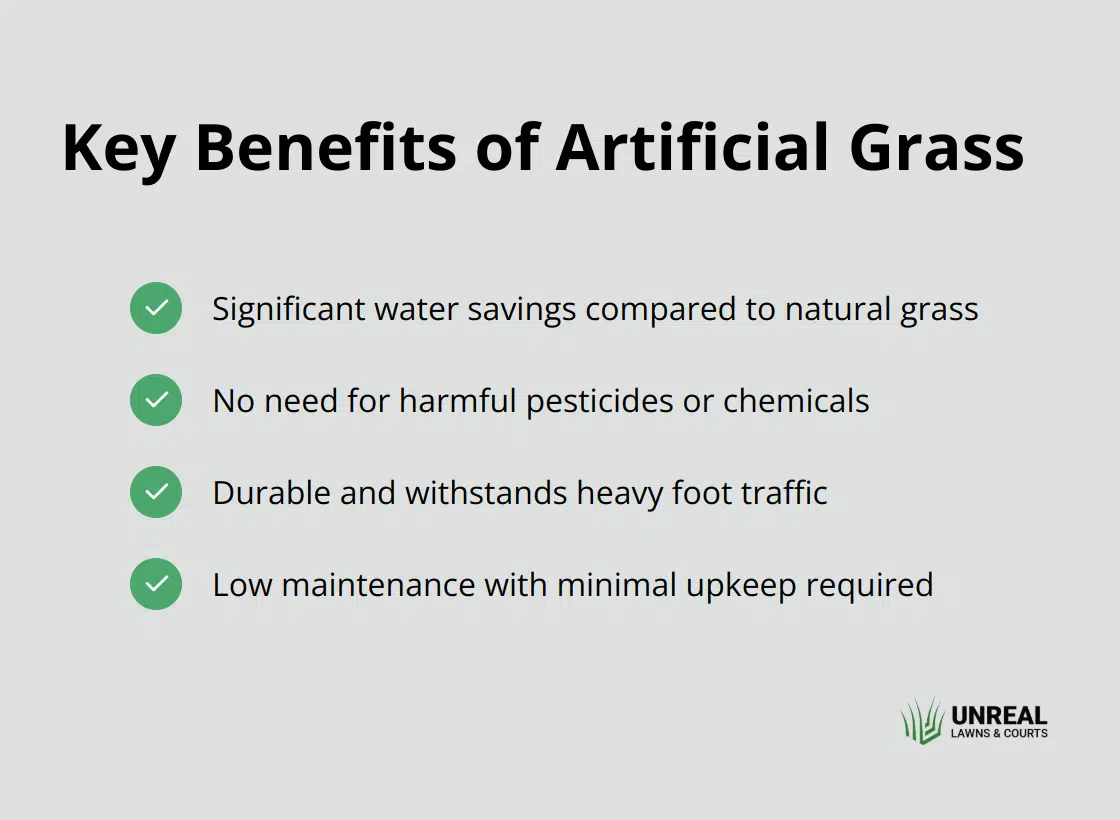
Artificial grass maintains its lush, vibrant appearance regardless of weather conditions. Unlike natural grass, prone to patches and muddy puddles, synthetic turf stays green and inviting year-round. This consistent aesthetic enhances property value and kerb appeal, even during the harshest summer months.
Dramatic Water Savings
One of the most significant advantages of drought-resistant artificial grass is its water efficiency. Natural grass requires substantial water, especially in dry or drought-prone areas, and maintaining it can lead to high water usage. In contrast, artificial grass needs no watering at all, which leads to substantial water savings and reduced utility bills. This aligns perfectly with water conservation efforts and helps property owners comply with increasingly strict water restrictions.
A Chemical-Free Zone
Synthetic turf eliminates the need for harmful pesticides, commonly used in natural lawn maintenance. This not only saves money but also creates a safer environment for children and pets. The absence of chemicals means no harmful runoff into local water systems, which contributes to overall environmental health.
Built to Last
High-quality drought-resistant artificial grass withstands heavy foot traffic and pet use. Unlike natural grass that can develop bare patches or become muddy in high-traffic areas, synthetic turf maintains its structure and appearance. This durability makes it an ideal choice for busy households, commercial spaces, and areas frequented by pets.
Easy Maintenance
Artificial grass requires minimal upkeep compared to natural lawns. Property owners can say goodbye to time-consuming tasks like mowing, edging, and fertilising. A simple brush or rinse (in case of spills) is usually sufficient to keep the turf looking pristine. This low-maintenance aspect not only saves time but also reduces the need for lawn care equipment and associated costs.
As we explore the various benefits of drought-resistant artificial grass, it becomes clear why more New Zealand property owners are making the switch. In the next section, we’ll discuss how to choose the right type of drought-resistant artificial grass for New Zealand’s unique climate conditions.
How to Select the Best Artificial Grass for New Zealand
Heat-Resistant Fibres
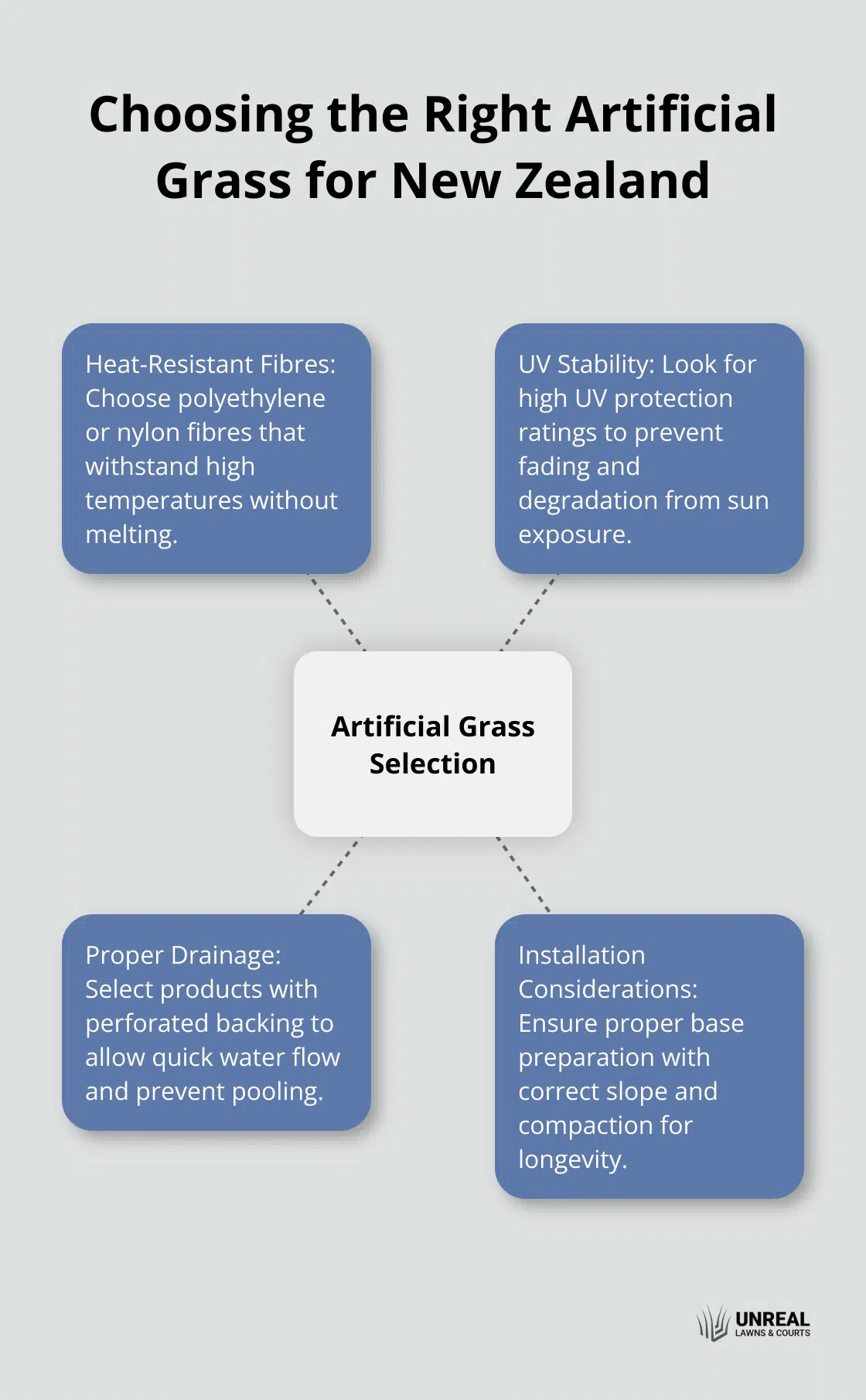
New Zealand’s sunny climate demands heat-resistant fibres in artificial grass. Polyethylene or nylon fibres stand up to high temperatures without melting or becoming uncomfortable to touch. Advanced products incorporate cooling technology, which can reduce surface temperatures of synthetic turf.
UV Stability
UV stability preserves the colour and integrity of your artificial lawn. High-quality synthetic grass contains UV stabilisers that prevent fading and degradation from prolonged sun exposure. When you select synthetic turf, ask about its UV protection rating. A higher rating ensures your lawn will retain its vibrant green colour, even under New Zealand’s intense summer sun.
Proper Drainage
Effective drainage is vital for artificial grass, especially during New Zealand’s occasional heavy rainfalls. Products with a perforated backing allow water to flow through quickly. This feature prevents water pooling, which can lead to mould growth.
Installation Considerations
Proper base preparation is key for installation. A well-constructed base of compacted aggregate allows for efficient drainage and prevents shifting or settling of the turf. Professional installation ensures that the base has the correct slope and compaction, which maximises the longevity and performance of your drought-resistant artificial grass.
Choosing the Right Product
When you select artificial grass for New Zealand’s unique climate, consider these factors:
- Fibre type
- UV protection rating
- Drainage capabilities
- Installation requirements
High-quality products (such as those offered by Unreal Lawns & Courts) specifically designed for New Zealand’s climate will provide the best performance and longevity. The right drought-resistant artificial grass will withstand hot, dry summers while maintaining its lush appearance and durability.
Final Thoughts
Weather-resistant artificial grass transforms New Zealand properties challenged by dry summers. It maintains a lush appearance year-round, saves water, and eliminates chemical use. The durability and low maintenance of synthetic turf result in significant time and cost savings for property owners.
High-quality, UV-stable, and heat-resistant artificial grass withstands New Zealand’s harsh summer conditions. It addresses water restrictions and drought impacts on natural lawns without compromising aesthetics or functionality. Unreal Lawns & Courts offers premium artificial grass solutions designed for local climate conditions.
Artificial turf provides a practical alternative to drought-resistant grass. It creates a green oasis regardless of weather conditions. We encourage you to explore the benefits of artificial grass for your outdoor space.


