
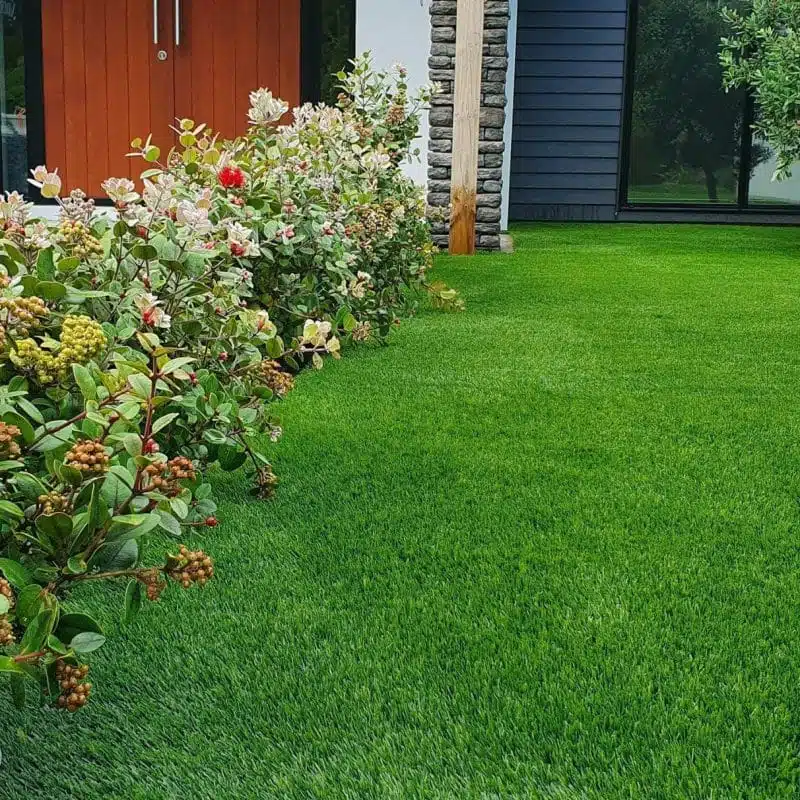

What Are the Benefits of Artificial Grass?
1. Less Routine Lawn Maintenance
Artificial grass removes the need for mowing, lawn fertiliser and regular lawn edging. That can make it a practical option for busy households, rental properties and smaller gardens.
It still needs care. Removing leaves, brushing the fibres and managing pet waste help keep the surface looking and performing as intended.
2. A Consistent Green Appearance
A synthetic lawn provides a consistent green finish without depending on natural grass growth. It can be useful where a natural lawn becomes patchy or struggles to maintain its appearance.
Choose a sample that suits your garden. Colour, blade shape, pile height and thatch all influence how the finished lawn looks.
3. No Irrigation to Keep Grass Growing
Artificial grass does not need irrigation to sustain growth. However, water may still be needed for cleaning, rinsing pet areas or cooling the surface when appropriate.
It is better to think of it as reducing lawn-watering requirements rather than creating a completely water-free garden.
4. A More Manageable Pet Area
Artificial grass can provide a dedicated outdoor area for dogs without the same exposed soil and worn grass patches found in some natural lawns.
Pet areas need careful product selection, drainage and cleaning. Solid waste must be removed promptly, and urine needs to pass through the turf and supporting layers. Odour management depends on the complete installation and maintenance routine.
Explore our artificial grass options for pets.
5. More Use of Difficult Garden Spaces
Small courtyards, narrow side gardens and shaded areas can be difficult places to grow a natural lawn. Artificial grass provides another landscaping option for these spaces.
Existing drainage problems still need to be addressed. Covering wet or uneven ground with turf does not resolve the underlying issue.
6. Flexible Backyard Design
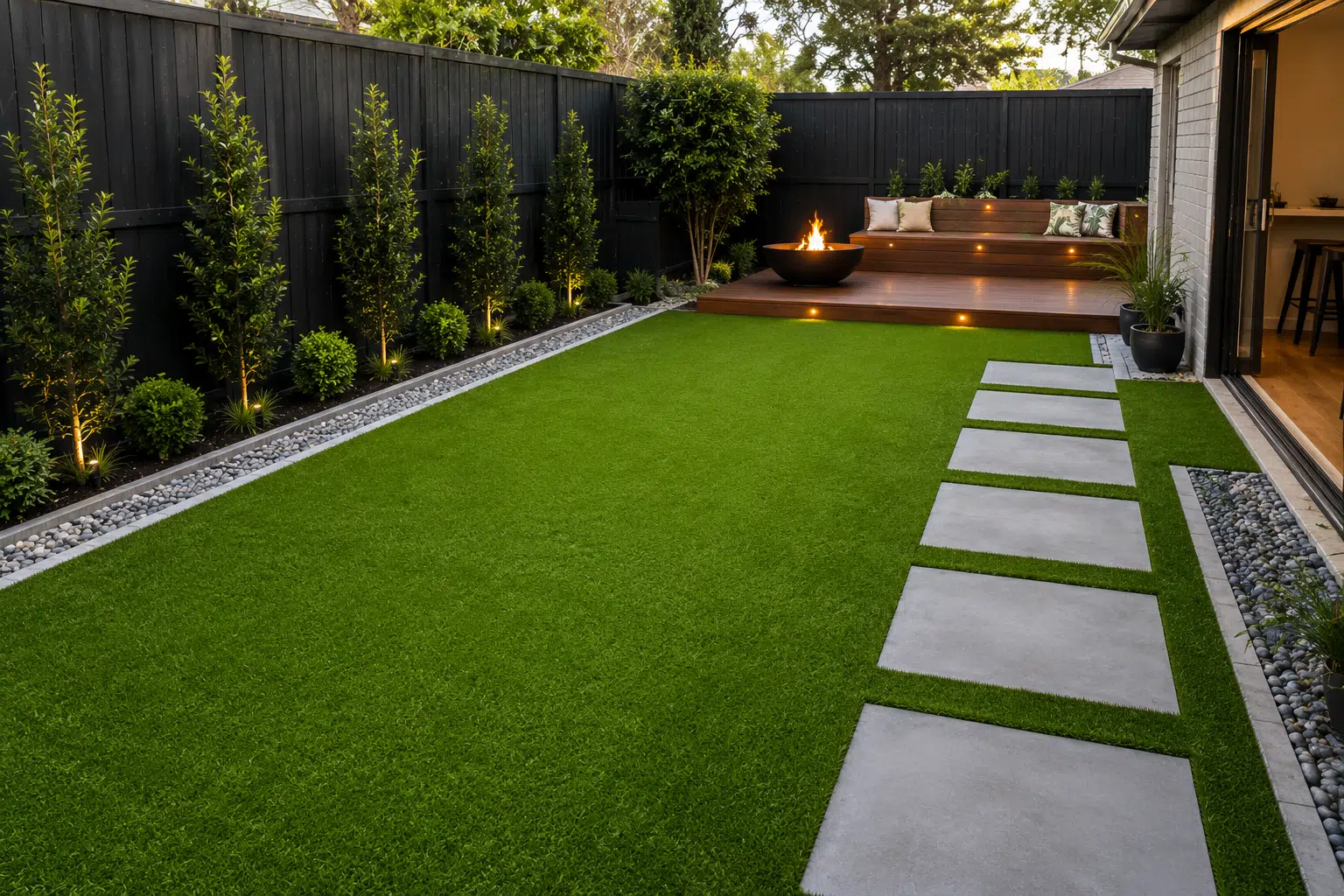
Synthetic turf can be combined with paving, decking, garden beds and seating areas. This makes it useful for creating a defined lawn within a compact outdoor space.
Planning the layout around available roll widths, access and seam placement can also help reduce unnecessary waste.
7. A Surface Suited to Your Intended Use
Different turf products suit different applications. A decorative courtyard, a busy family lawn and a pet area do not necessarily need the same product.
Choosing around actual use, rather than appearance alone, helps create a lawn that is practical to live with.
Artificial grass can make a garden easier to manage, particularly where muddy ground, pets, shade or regular mowing make a natural lawn difficult to maintain. However, it also involves an upfront investment and needs ongoing care.
The best choice depends on how you use your outdoor space, the conditions on your property and what you expect from your lawn. This guide explains the main pros and cons of fake grass so you can decide whether it suits your home.
Before You Choose Your Turf
Sunny Backyard?
Ask about our Cool Turf 5-in-1 options, and consider shade and when the lawn will be used.
Pets or Busy Family Life?
Choose around drainage, cleaning needs and foot traffic—not just how the grass looks.
Comparing Quotes?
Check what is included in base preparation, edging, drainage and installation, alongside the turf itself.
What Are the Drawbacks of Fake Grass?
Higher Upfront Cost
A professionally installed artificial lawn involves more than buying the grass. Removing the existing surface, disposing of material, preparing the base, installing edging and laying the turf all affect the price.
Access, drainage, ground conditions and the shape of the area can change the amount of work required. Compare quotes by their scope and specifications, rather than the square-metre price alone.
Our artificial grass pricing guide explains the main cost considerations.
The Surface Can Become Hot
Artificial grass can become hot in direct sunlight. Consider how much sun the area receives and whether children or pets will use it during warmer parts of the day.
Shade and sensible use remain important. Cooling features should be assessed against the specific product information; they should not be treated as a promise that the lawn will remain cool in every condition.
Cleaning and Grooming Are Still Required
Artificial grass is low maintenance, rather than maintenance-free. Leaves, dust and organic material still collect on the surface. Regularly used areas may need more frequent brushing, and pet areas require additional cleaning.
The right routine depends on the product, surrounding vegetation and how the lawn is used.
Installation Quality Matters
Poor base preparation, unsuitable drainage, weak joins or insecure edges can affect the finished lawn.
A suitable turf product cannot compensate for an unsuitable foundation. The installation needs to be designed around the site and intended use.
Read more about professional artificial grass installation.
It Does Not Replace Every Benefit of Natural Grass
Artificial grass is a manufactured surface. It does not provide the same living habitat or natural processes as a planted lawn.
Its environmental trade-offs include the materials used, installation waste, cleaning requirements and eventual replacement or disposal. Reduced mowing or irrigation alone does not establish that it is the more environmentally friendly choice in every situation.
It Will Eventually Need Replacement
The useful life of artificial grass varies with product quality, exposure, installation, traffic and maintenance.
Review the actual warranty terms and care requirements for the product you are considering. A product warranty and an installation workmanship warranty cover different things; neither should be treated as a guarantee of a fixed lifespan.
Is Artificial Grass Right for Your Backyard?
Artificial grass may suit you if you want to reduce mowing, create a manageable pet area or improve a space where growing a natural lawn has been difficult.
Natural grass may suit you better if you enjoy gardening, value a living lawn and have suitable conditions and time to maintain it.
Before choosing, consider:
- Use: Will the area be mainly decorative, or regularly used by pets and children?
- Sun exposure: How much direct sunlight does it receive?
- Drainage: Does water already collect on the site?
- Appearance: Have you compared physical samples?
- Maintenance: What cleaning and grooming will be needed?
- Installation: What base preparation, edging and drainage are included?
- Long-term cost: What do the warranty, maintenance and eventual replacement involve?
For a family garden, look at the complete outdoor design. Turf, planting, shade, access and drainage should work together.

Artificial Grass FAQs
Does fake grass look real?
Appearance varies between products. Blade shape, colour combinations, thatch and pile height all contribute to the finished look. Compare physical samples and photographs of completed installations before choosing.
Does artificial grass need maintenance?
Yes. Remove debris, brush the fibres when needed and follow the supplier’s cleaning and infill guidance. Pet areas and heavily used lawns usually need more attention than decorative areas. Learn about our maintenance and grooming service.
Does artificial grass get hot in the sun?
Yes, artificial grass can become hot in direct sunlight. Our Cool Turf 5-in-1 range is an option to explore when comparing products for sunny areas. Review the specific product information and consider shade and when children or pets will use the lawn. Cooling features do not mean the surface will remain cool in every condition.
Can artificial grass smell when dogs use it?
Pet odour can develop if urine residues accumulate. Drainage, installation design, suitable infill and regular cleaning all matter. Choosing pet-suitable artificial grass is one part of the solution.
Does artificial grass drain well?
Drainage depends on the complete system: the turf backing, infill, base construction and where the water can go. Existing drainage problems should be assessed before installation.
Is artificial grass suitable for children?
Suitability depends on the intended activity and the complete installed system. A garden lawn should not automatically be described as a certified playground safety surface. Where fall protection is required, the surfacing system needs an appropriate assessment and specification. Explore our playground turf options for these applications.
Can artificial grass be installed on concrete?
Some installations can use an existing hard surface, but its condition, drainage, levels and edges need to be assessed first. Any underlay should be selected for the particular application.
Choosing a Lawn That Works for You
Artificial grass can reduce routine lawn work and make difficult garden spaces more usable. The trade-offs include installation cost, summer surface temperatures, ongoing cleaning and eventual replacement.
At Unreal Lawns, we can help you compare products and assess the preparation needed for your property. We provide installation services in Auckland, Hamilton and Tauranga, alongside nationwide turf supply.
Explore our residential artificial grass options or contact Unreal Lawns to discuss your space.


